


Blog
You Won’t Believe How Reliable These HF Radios Are for Emergency Communications
When mobile networks fail, satellites drop out, and power is compromised, one system keeps working: HF radio. For emergency communications planners, reliability is not a marketing claim. It is the difference between coordination and chaos. HF radio reliability is the reason this technology continues to underpin emergency, government, maritime, and remote-area communication across Australia.
This article explains why HF radios remain so dependable, where they outperform modern alternatives, and how planners can deploy them with confidence.
Quick Wins: Why HF Radios Still Matter
-
Operate independently of cellular, internet, or satellite networks
-
Proven to work during bushfires, floods, cyclones, and blackouts
-
Long-range communication without infrastructure
-
Lower ongoing costs compared to satellite systems
-
Scalable for local, regional, and national coverage
Why HF Radio Reliability Is Trusted in Emergencies
HF radio reliability is not theoretical. It is field-proven over decades of real-world disasters. Unlike cellular or IP-based systems, HF radios do not rely on towers, fibre, or third-party networks that can fail simultaneously.
In Australia, the Australian Maritime Safety Authority (AMSA) operates continuous nationwide monitoring of HF radio distress, urgency, and safety communications, reinforcing HF radio’s role as a dependable communication method when other systems are unavailable or compromised.
HF (High Frequency) radios use ionospheric propagation, allowing signals to travel hundreds or thousands of kilometres by reflecting off the atmosphere. This natural mechanism remains resilient even when ground-based infrastructure is destroyed.
For emergency comms planners, this means:
-
No single point of failure
-
No dependency on commercial carriers
-
No congestion during peak crisis demand
HF radios continue to function when systems designed for convenience cannot.
Built for Harsh Australian Conditions
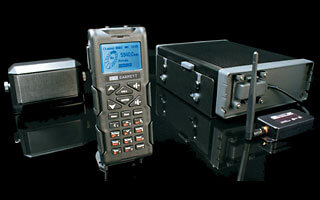
Australia’s geography is unforgiving. Vast distances, extreme heat, cyclones, bushfires, and flooding expose the weaknesses of many communication systems. HF radios are engineered specifically for these realities.
Modern HF radio equipment features:
-
Ruggedised hardware rated for heat, dust, and vibration
-
Power flexibility including vehicle, solar, battery, and generator options
-
Minimal maintenance requirements
-
Long operational lifespans
In remote communities, outback operations, and disaster zones, HF radio reliability is often the only viable option.
When HF Radios Outperform Satellites and Mobile Networks
Satellite phones are often seen as the ultimate backup, but emergency planners understand their limitations:
-
Network congestion during large-scale disasters
-
Subscription dependency
-
Limited group communication capability
-
Vulnerability to atmospheric conditions and line-of-sight constraints
HF radios, by contrast, excel at:
-
One-to-many broadcasts
-
Network-wide coordination
-
Extended operations without recurring costs
-
Operating when satellites are overloaded or unavailable
This is why HF radio systems remain standard issue for emergency services, defence, maritime operations, and remote infrastructure providers.
Reliability Comes from System Design, Not Just Hardware
HF radio reliability depends on more than the radio itself. Proper system design is critical.
Key components include:
-
Correct antenna selection and placement
-
Frequency planning for day, night, and seasonal conditions
-
Redundant power options
-
Operator training
At Satellite World Store, HF radio systems are specified as complete solutions rather than standalone devices. This approach ensures the system performs when it matters, not just on paper.
Proven in Australian Emergency Scenarios
HF radios are routinely relied upon during:
-
Bushfire seasons when mobile towers fail
-
Flood events isolating entire regions
-
Cyclones disrupting power and telecommunications
-
Search and rescue operations beyond network coverage
Emergency communications planners trust HF radios because they have already proven themselves under the worst possible conditions.
Why Emergency Planners Choose Satellite World Store
Choosing the right supplier is as important as choosing the technology. Satellite World Store specialises in communication systems designed for reliability, compliance, and long-term use.
What sets Satellite World Store apart:
-
Deep experience with Australian emergency and remote-use requirements
-
End-to-end system support rather than product-only sales
-
Access to proven HF radio equipment from trusted manufacturers
-
Practical guidance based on real deployment scenarios
For planners, this results in fewer assumptions, fewer gaps, and greater confidence.
HF Radio Reliability and Compliance
Emergency communications systems must meet regulatory and operational standards. HF radio solutions supplied through Satellite World Store align with Australian licensing, frequency management, and safety expectations.
This ensures:
-
Legal operation across jurisdictions
-
Interoperability with existing emergency networks
-
Reduced risk during audits or post-incident reviews
Reliability is not only technical. It is also procedural.
Questions Emergency Planners Ask About HF Radio Reliability
Are HF radios still relevant with modern technology?
Yes. HF radios complement modern systems by providing a resilient, infrastructure-independent layer when other technologies fail.
How far can HF radios communicate?
Depending on conditions, HF radios can reliably communicate from hundreds to thousands of kilometres without repeaters.
Do HF radios require internet or satellites?
No. HF radios operate independently of internet, cellular, or satellite networks.
Are HF systems difficult to operate?
Modern HF radios are far more user-friendly than legacy systems, particularly when configured correctly and paired with basic training.
How long do HF radio systems last?
With proper installation and maintenance, HF radio systems often remain operational for decades.
The Bottom Line for Emergency Communications Planners
HF radio reliability is not a surprise to those who rely on it. It is a proven constant. In an environment where redundancy, independence, and resilience matter more than convenience, HF radios continue to deliver.
Speak with Satellite World Store to design an HF radio system you can trust when it counts.