


Blog
How the Barrett 4050 Delivers Crystal Clear Comms Worldwide
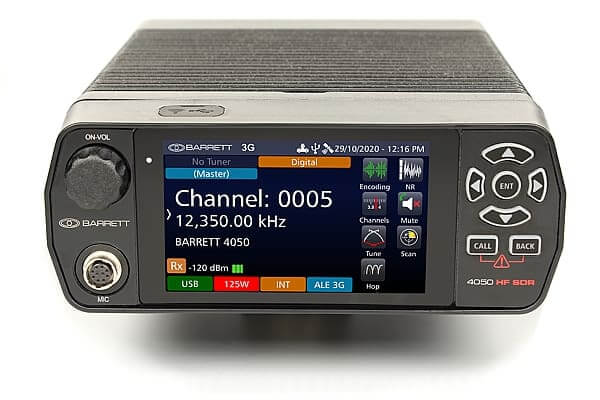
When communication matters most, compromise isn’t an option. Across remote regions, offshore operations, and long-distance radio networks, HF radio remains the backbone of reliable, infrastructure-free communication. For tech-savvy radio enthusiasts who understand propagation, signal-to-noise ratios, and the limits of legacy analogue equipment, the Barrett 4050 Series represents a clear step forward.
Designed as a modern SDR HF radio, the 4050 Series blends traditional HF reliability with advanced digital signal processing. The result is clearer audio, smarter control, and dependable worldwide communications, even when conditions are far from ideal.
Manufactured by Barrett Communications, the 4050 Series reflects decades of HF expertise combined with contemporary radio engineering.
Quick Overview: What Sets the Barrett 4050 Apart
Before diving into the technical detail, it’s worth summarising why the Barrett 4050 Series continues to attract experienced operators.
The radio is built around Software Defined Radio architecture, allowing it to outperform traditional analogue HF systems in challenging conditions. Operators benefit from noticeably cleaner audio, better resistance to interference, and greater control over signal behaviour. Combined with its reputation for durability, the 4050 Series stands out as a serious communications platform rather than a consumer-grade device.
Why the Barrett 4050 Series Is a Step Change in HF Radio
Conventional HF radios rely heavily on analogue circuitry for filtering and signal shaping. While effective, these systems are inherently limited by fixed components and susceptibility to noise and interference.
The Barrett 4050 Series uses SDR technology, digitising signals early in the receive chain. Once in the digital domain, powerful processing algorithms can be applied in real time. This fundamentally changes how the radio behaves on crowded or unstable HF bands.
For the operator, this translates into noticeably cleaner received audio, reduced background noise without hollow or artificial sound, and better separation of weak signals from interference. Instead of fighting conditions, the radio adapts to them.
SDR Technology and What It Means for Audio Clarity
The real strength of the 4050 Series lies in how it handles signal processing. SDR allows the radio to apply dynamic filtering, noise reduction, and bandwidth control with far greater precision than analogue designs.
Advanced digital noise reduction suppresses atmospheric and man-made noise while preserving speech intelligibility. This is particularly valuable during poor propagation or when operating at the edge of usable signal levels.
Flexible bandwidth control allows operators to tailor receive and transmit characteristics to suit conditions, whether prioritising voice clarity or minimising interference from adjacent channels. Frequency stability and accuracy are also significantly improved, reducing drift and maintaining consistent performance over long operating sessions.
For technically minded users, this level of control transforms the radio into a platform for experimentation, optimisation, and learning.
Worldwide Communications Without Infrastructure
HF radio remains unmatched for long-distance communication without reliance on cellular, satellite, or internet services. The Barrett 4050 Series is engineered to exploit this advantage fully.
In Australia, national emergency management planning emphasises the importance of communications systems that continue to operate when conventional infrastructure is unavailable. The National Emergency Management Agency highlights the need for resilient, infrastructure-independent communications to support coordination during emergencies, remote operations, and large-scale disruptions.
By taking advantage of ionospheric propagation, the radio supports long-range voice communication across continents, as well as data modes for messaging, monitoring, and control. This makes it particularly valuable in remote locations, offshore environments, and scenarios where infrastructure is unavailable or unreliable.
For radio enthusiasts interested in DX performance or off-grid operation, the 4050 delivers predictable, repeatable results when matched with appropriate antennas and operating practices.
Built for Operators Who Want Technical Control
Unlike radios designed to hide complexity, the Barrett 4050 Series embraces it without becoming difficult to use. The interface is intuitive, yet deep enough to satisfy technically curious users.
The front panel layout is clear and logical, while PC-based programming enables detailed configuration and fine adjustment. Diagnostic tools allow operators to monitor performance, troubleshoot issues, and understand how the radio responds to changing conditions.
This balance of usability and depth makes the 4050 Series suitable for fixed stations, mobile installations, and advanced hobbyist setups where flexibility and insight matter.
Reliability in Real-World Conditions
HF radios are rarely used in ideal environments. Heat, vibration, dust, and continuous operation are common realities. The Barrett 4050 Series is engineered with these challenges in mind.
Its robust construction supports long service life, while careful thermal design ensures stable operation during extended use. Resistance to vibration makes it suitable for mobile and transportable installations without compromising performance.
This reliability ensures that audio clarity and system stability are maintained over time, not just when the radio is new.
Future-Proof Design Through Software
One of the most practical advantages of an SDR HF radio is longevity. As standards evolve and operating requirements change, software updates can extend capability without replacing hardware.
The Barrett 4050 Series benefits from firmware updates that refine performance, introduce new features, and improve usability. This reduces obsolescence and protects the investment of users who expect their equipment to remain relevant for years.
For experienced operators, this future-proof approach is a clear advantage over fixed-function analogue radios.
Who the Barrett 4050 Series Is Best Suited For
The 4050 Series is best suited to tech-savvy radio enthusiasts who enjoy fine control and understand HF fundamentals. It is also ideal for operators working beyond the reach of conventional networks, and for users upgrading from analogue HF radios to modern SDR platforms.
If you value understanding how your radio performs and want the ability to adjust it to suit changing conditions, the Barrett 4050 Series is designed with you in mind, with expert product guidance and support available through Satellite World Store.
Frequently Asked Questions About the Barrett 4050
What makes the Barrett 4050 a true SDR HF radio?
It converts RF signals to digital form early in the signal chain, allowing advanced digital signal processing for filtering, noise reduction, and frequency stability.
Can the Barrett 4050 handle poor propagation conditions?
Yes. Its SDR architecture significantly improves intelligibility during high noise levels and weak-signal conditions.
Is the 4050 suitable for global communication?
Yes. HF radio enables worldwide coverage, and the 4050 Series is optimised for long-range operation without external infrastructure.
Does the radio support updates?
Yes. Software and firmware updates allow performance improvements and feature enhancements over time.
Is this radio suitable for beginners?
It is better suited to experienced or technically inclined users who want deeper control over HF radio performance.
Clear, Dependable HF Communications Anywhere in the World
The Barrett 4050 Series shows what modern HF radio can achieve when traditional reliability is combined with advanced SDR technology. For radio enthusiasts who demand clarity, control, and worldwide reach, it remains one of the most capable HF platforms available.
If crystal-clear global communications matter to you, the Barrett 4050 Series continues to set the benchmark.