


Blog
Inside the Barrett 2050 Series: What Makes It a Field Favourite
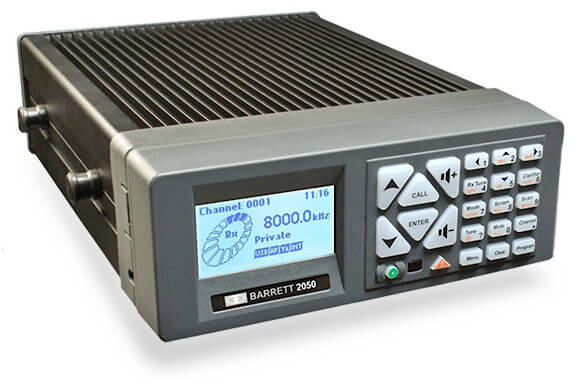
Why the Barrett 2050 Series Earned Its Reputation in the Field
For tactical radio operators, communications gear is judged by one thing: whether it works when conditions turn against you. Heat, dust, vibration, long duty cycles, limited power, unpredictable terrain. The Barrett 2050 Series has become a field favourite because it is engineered for these realities, not controlled environments.
Built by Barrett Communications, the 2050 Series reflects decades of operational feedback from military, government, and critical infrastructure users. It is not a feature-first radio. It is a reliability-first platform that delivers strong technical performance without unnecessary complexity.
This article explains why experienced operators continue to specify the Barrett 2050 Series when failure is not an option.
Quick Wins: What Operators Value Most
-
Proven HF performance in demanding environments
-
Clear, operator-focused controls
-
Robust construction for mobile and fixed installations
-
Flexible configuration for tactical deployments
-
Long service life with predictable maintenance
These benefits are based on field use, not marketing claims.
Engineered for Tactical HF Communications
Built for Harsh Operational Environments
The Barrett 2050 Series is designed to operate where lightly ruggedised radios struggle. Its chassis design, internal layout, and component selection prioritise heat dissipation, vibration resistance, and electrical stability.
For tactical operators working from vehicles, remote command posts, or temporary field bases, this reliability is critical. Radios may run continuously, endure temperature swings, and remain exposed to movement and dust. The 2050 Series is built to handle this without performance drift or premature failure.
HF Performance That Supports Real Missions
High-frequency radio remains essential where satellite and cellular systems are unavailable, restricted, or compromised. The Barrett 2050 Series provides consistent HF performance over long distances, supporting both voice and data communications.
In Australia, this need is well documented. Geoscience Australia notes that large-scale disasters such as bushfires frequently disrupt power and telecommunications infrastructure across wide areas, reinforcing the importance of communication systems that can operate independently of damaged or unavailable networks.
Operators value its predictable behaviour. Once configured, it remains stable. Channels, frequencies, and operating modes do not require constant adjustment, reducing operator workload during time-critical situations.
Operator-Centred Design Without Unnecessary Complexity
Clear Controls Under Pressure
In tactical operations, complexity increases risk. The Barrett 2050 Series avoids cluttered interfaces and instead uses logical, tactile controls that are easy to operate in low light or high-stress conditions.
Menus are structured around practical workflows rather than engineering novelty. This approach contributes to shorter training times and fewer operator errors in the field.
Fast Deployment and Reconfiguration
Operational requirements change quickly. The 2050 Series supports rapid setup and redeployment without specialised tools or extended downtime. This flexibility allows teams to establish reliable communications quickly and adapt as missions evolve.
Whether installed in a vehicle, used at a fixed site, or deployed as part of a mobile HF network, the radio maintains stability and performance.
Reliability That Reduces Operational Risk
Consistent Performance Over Time
Tactical radio operators often work with limited redundancy. When a primary system fails, consequences can be immediate. The Barrett 2050 Series is trusted because it delivers consistent performance throughout its service life.
This predictability reduces uncertainty. Operators know how the radio will behave in familiar and unfamiliar environments alike.
Supportability and Long-Term Value
Another reason the 2050 Series remains in service is supportability. Availability of parts, servicing knowledge, and long-term familiarity make it a low-risk platform for extended deployments. For organisations planning multi-year operational use, this stability is a significant advantage.
Why Tactical Operators Continue to Choose the 2050 Series
The Barrett 2050 Series does not follow trends. It focuses on dependable HF communication where infrastructure is limited or non-existent. Tactical operators continue to choose it because it aligns with real operational demands:
-
Extended duty cycles rather than short demonstrations
-
Harsh environments rather than controlled settings
-
Mission reliability rather than feature lists
This alignment turns equipment into trusted tools.
Frequently Asked Questions About the Barrett 2050 Series
Is the Barrett 2050 Series still relevant today?
Yes. Its relevance comes from reliability, proven HF performance, and operator familiarity rather than novelty.
Who typically uses the Barrett 2050 Series?
It is commonly used by military units, government agencies, emergency services, and tactical operators requiring dependable HF communications in remote or hostile environments.
Is it suitable for mobile and fixed installations?
Yes. The radio is designed to perform reliably in both vehicle-based and fixed-site deployments.
What distinguishes it from newer HF radios?
Newer radios may offer additional features, but the 2050 Series stands out for proven field performance, stability, and long-term dependability.
Final Takeaway
The Barrett 2050 Series earned its reputation by performing reliably under pressure. For tactical radio operators who prioritise clarity, consistency, and operational confidence, it remains a trusted HF platform that delivers exactly what is required.
For genuine equipment, expert advice, and trusted supply, speak with Satellite World Store.